For much of my life, I chased the same things many people chase.
Success. Status. Recognition. Money.
I held executive-level technology positions with titles like CTO and CIO. I’ve worked in penthouse offices, lived in gated communities, driven nice vehicles, and experienced the kind of lifestyle many people spend years trying to achieve.
From the outside, it looked like I had made it.
Then life had other plans.
Over the course of several years, I experienced multiple life-threatening medical emergencies, including pulmonary embolisms and heart attacks that nearly ended my life more than once. Each time I somehow survived.
The physical toll was significant.
The financial toll was devastating.
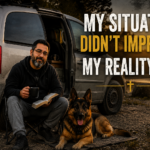
The life I had spent decades building slowly disappeared, leaving me starting over with far less than I ever imagined. Eventually, I found myself living in a van with my dog, working whatever jobs I could find while trying to rebuild a simple, stable life.
And that led me to a question that I could no longer ignore:
Why am I still here?
Why did I survive when so many others do not?
Why was I repeatedly given another chance?
For most of my life I had doubts about God. I approached faith with skepticism and questions. But after everything that had happened, it became increasingly difficult for me to believe that my continued survival was simply random chance.
So I began searching.
Interestingly, I did not start with the Bible itself.
I started with history.
I began studying the historical evidence surrounding Jesus and the early Christian movement. I looked at archaeological discoveries, historical records, and non-Christian sources that referenced Jesus and the events surrounding the first century.
I discovered that the existence of Jesus as a historical figure is supported not only by Christian writings but also by ancient historians such as Josephus and Tacitus. The more I studied, the more convinced I became that Jesus of Nazareth was not simply a legend or mythological figure, but a real man who walked the earth.
That realization pushed me toward the Bible itself.
At first, I struggled.
I had questions.
Lots of them.
Some passages seemed confusing. Some stories seemed unbelievable. Some sections appeared contradictory. The deeper I dug, the more questions I found.
But instead of walking away, I kept studying.
I discovered chronological Bibles and found that reading Scripture in historical sequence helped me better understand the flow of events and the broader story being told. I also began comparing translations and studying the original Greek and Hebrew terms behind many passages.
What I found surprised me.
Many concepts that seemed simplistic in English often carried layers of meaning in the original languages. Words that appear straightforward on the surface sometimes represented much deeper ideas within their historical and cultural context.
The more I studied, the more the Bible began making sense.
Then something else happened.
I started paying attention to people like John the Baptist.
Growing up, I had often encountered a version of Christianity that emphasized gentleness while rarely discussing courage, conviction, sacrifice, and truth.
But John the Baptist wasn’t soft.
Neither were many of the prophets.
These were people who were willing to lose everything rather than compromise what they believed to be true. They challenged corruption. They confronted powerful people. They endured persecution. Some paid for it with their lives.
That side of Christianity was largely unfamiliar to me.
And yet it was everywhere in Scripture.
The more I studied, the more I realized that Christianity was not merely about comfort. It was about transformation, conviction, service, sacrifice, and truth.
Eventually, I felt called to teach and serve others.
I became interested in preaching, pastoral ministry, and chaplaincy.
But I also recognized something important.
Having an opinion is not the same thing as being qualified to teach.
I had no interest in simply obtaining an ordination certificate and immediately placing myself in a position of authority. If I was going to teach Scripture, I wanted to approach that responsibility with humility, proper training, and a serious commitment to learning.
That decision ultimately led me to seminary.
After considerable research, I chose George W. Truett Theological Seminary at Baylor University and began preparing for the journey ahead.
My goal is to pursue formal theological education, earn certifications in Christian studies and ministry, and continue my education as far as God allows.
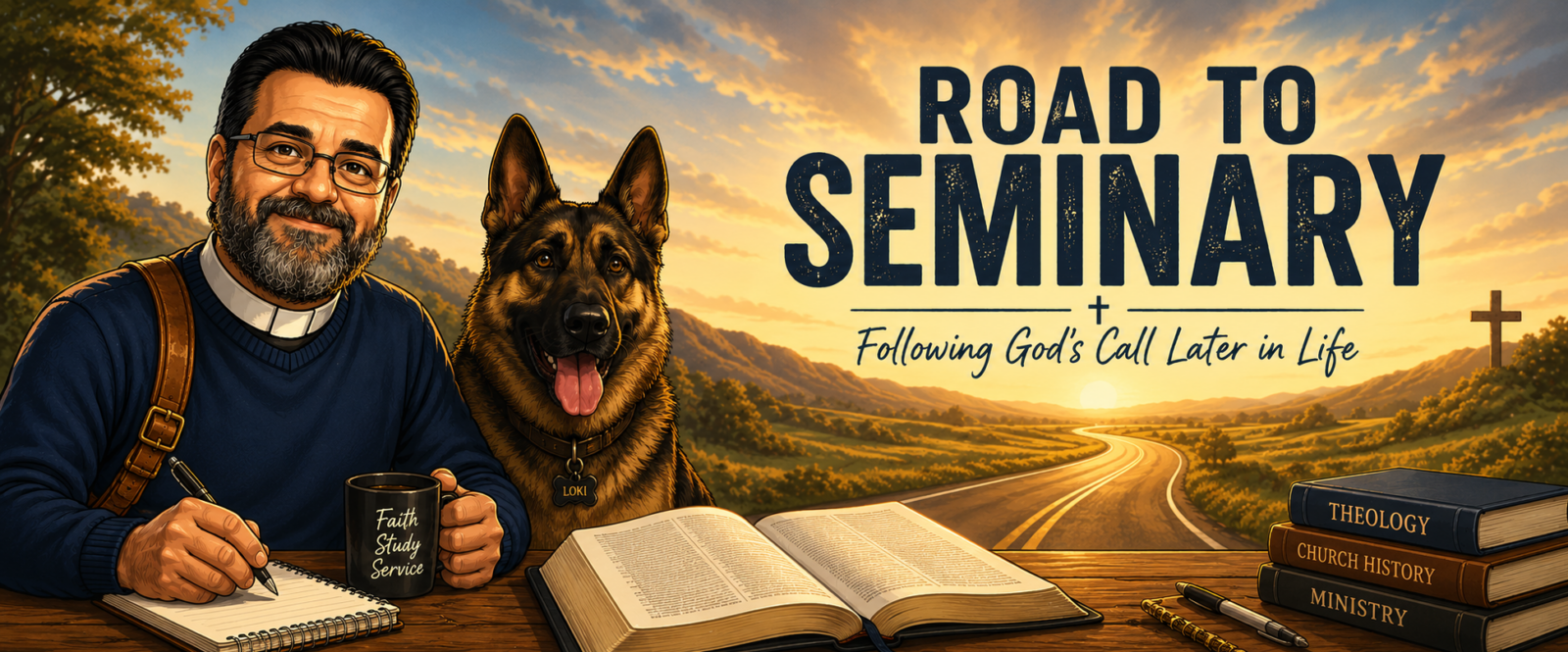
Road to Seminary exists to document that journey.
The successes.
The struggles.
The questions.
The lessons.
And perhaps most importantly, the ongoing search for what God intends to do with the extra time I’ve been given.
Because after everything I’ve survived, I no longer believe I’m still here by accident.