
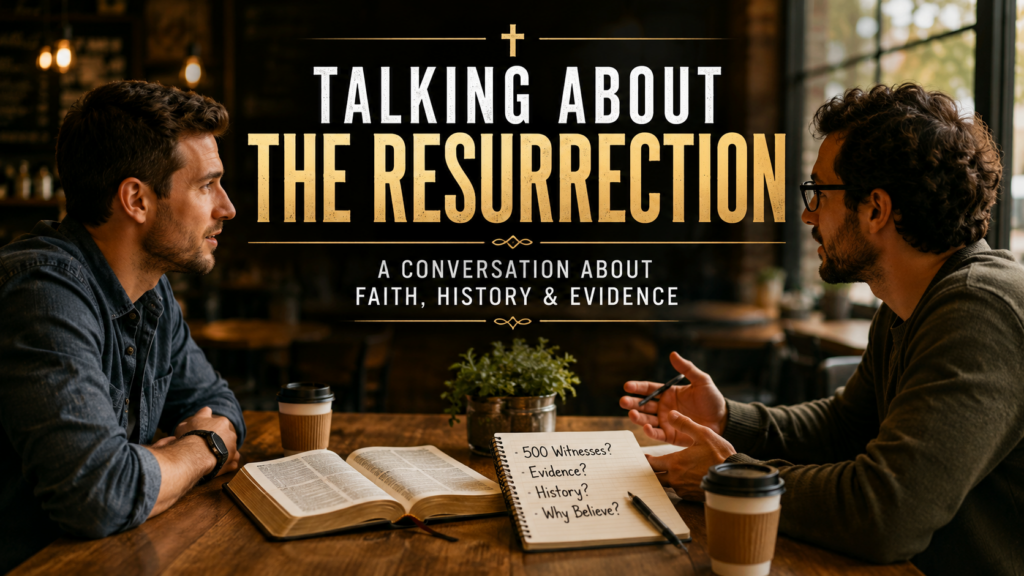
One of the hardest conversations a Christian can have is discussing the resurrection of Jesus with someone who doesn’t already believe. Many of us genuinely want to share our faith, but sometimes we make the mistake of presenting something as undeniable proof when, from the perspective of a skeptic, it simply isn’t.
A perfect example is the statement that more than 500 people witnessed the resurrected Jesus. Christians often point to this as if it settles the debate. The problem is that, to someone who doesn’t already believe the Bible is authoritative, it doesn’t.
Paul writes in 1 Corinthians 15 that Jesus appeared to more than 500 believers at one time. But we don’t have a list of those witnesses. We don’t have hundreds of individual testimonies preserved in history. We don’t know their names. We don’t have their personal accounts of what they experienced.
Think about it from the perspective of someone who is skeptical.
If someone today claimed that 500 people witnessed a miracle, what would you want to see? You would probably ask for interviews, eyewitness statements, names, or independent documentation. Those are reasonable questions.
To a non-believer, simply saying, “The Bible says there were 500 witnesses,” isn’t much different than someone from another religion saying, “Our holy book says this happened.” If they don’t already accept the source as trustworthy, quoting the source isn’t likely to convince them.
This doesn’t mean Paul was lying. It doesn’t mean the resurrection didn’t happen. It simply means that this particular argument is usually not the strongest place to begin.
Instead of trying to “win” the discussion with a verse, it may be better to have an honest conversation about the historical evidence as a whole. Why were the disciples willing to suffer and die for what they claimed to have seen? Why did Christianity explode in growth despite intense persecution? Why was the tomb reported empty? Why did people who had every reason to reject Jesus suddenly become His followers?
Those questions don’t force someone to believe, but they encourage them to think.
Most importantly, remember that our job isn’t to argue someone into the Kingdom of God. Scripture tells us that faith ultimately comes through the work of God, not through our ability to debate.
Sometimes the most powerful testimony isn’t an argument at all. It’s a changed life.
If your life reflects the love, grace, and hope of Christ, people may become curious about the reason for that hope. And when they ask, you’ll have the opportunity to share not just facts, but the One who changed you.
Winning an argument has never saved anyone.
Pointing someone to Jesus just might.